Markets & Economy · Ghana · West Africa
Ghana's 2027 budget: $10bn New Economy plan rests on eight pillars, led by $3bn for agriculture
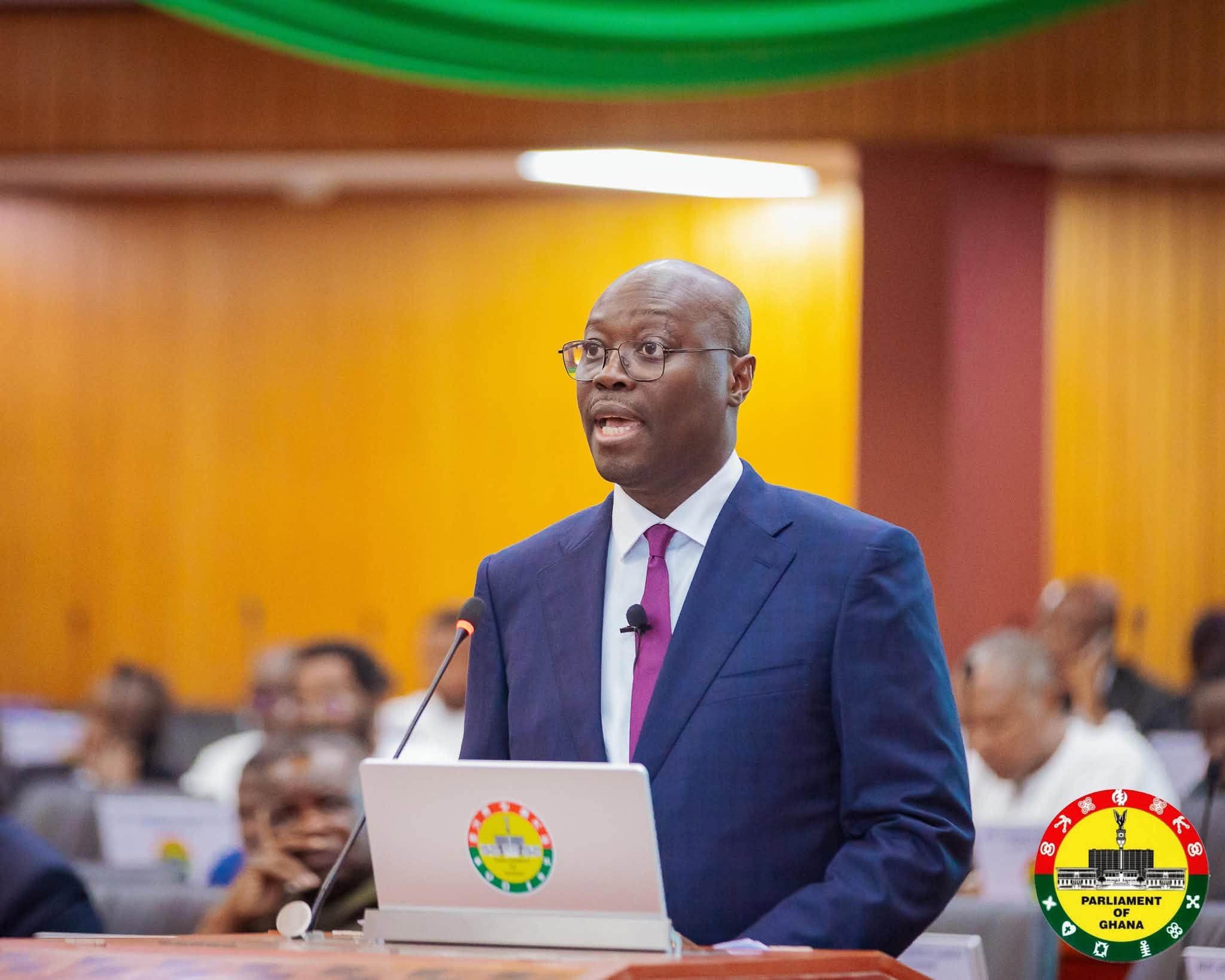
ACCRA — Ghana will spend $10 billion over four years to transform the structure of its economy, Finance Minister Dr Cassiel Ato Forson told Parliament on Thursday, November 12, presenting a 2027 budget that marks the country’s shift from crisis recovery to growth and job creation.
The budget, titled The New Economy, New Ghana, Jobs and Prosperity, comes as Ghana prepares to mark 70 years of independence in 2027.
“Over a four-year period, from 2027 to 2030, Government will spend US$10 billion to create a modern Ghanaian economy for jobs and prosperity,” Ato Forson said.
“We depend too heavily on raw material exports, add too little value at home and create too few productive jobs for our people,” he told the House.
Eight pillars
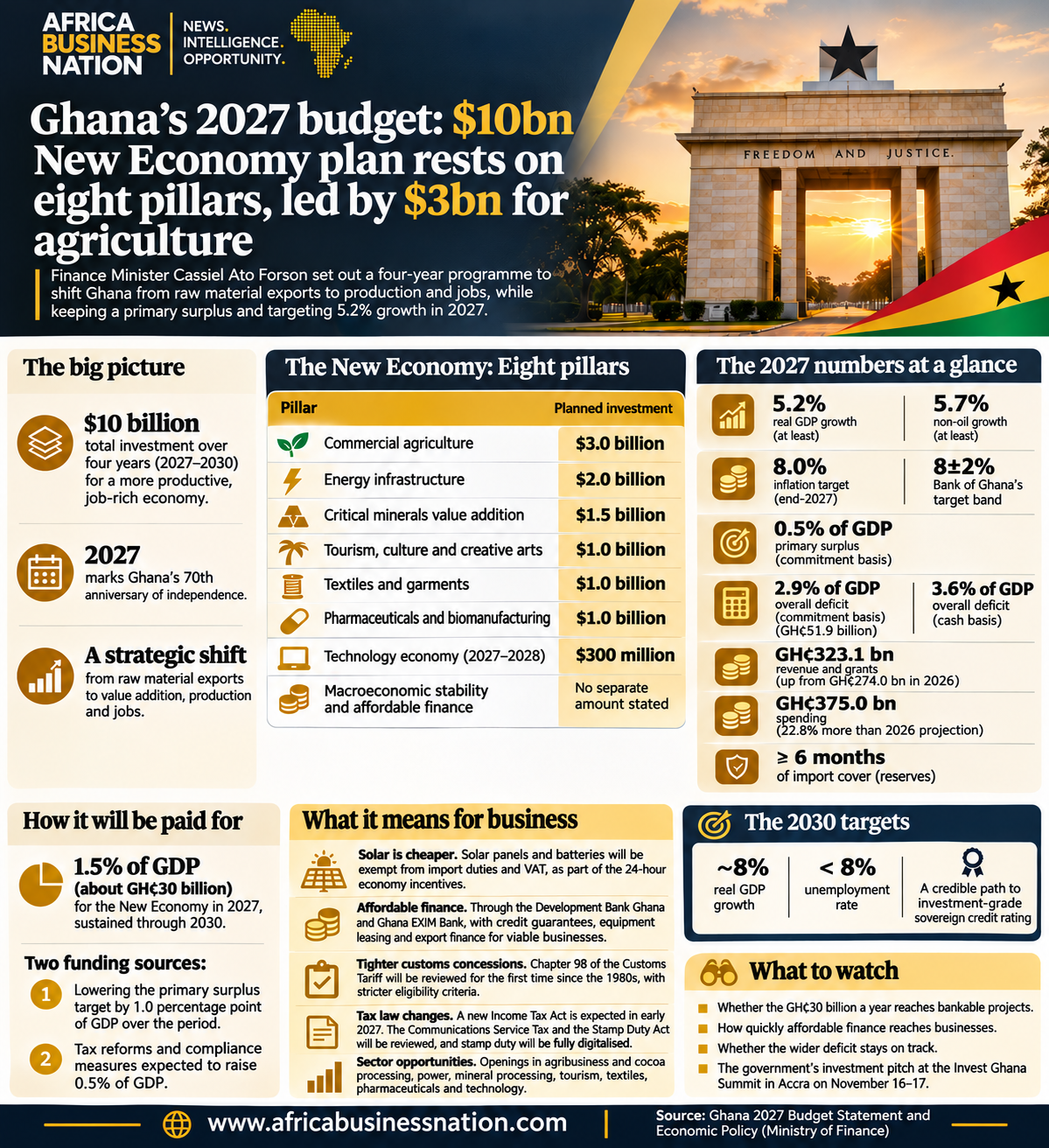
The New Economy rests on eight pillars: commercial agriculture ($3 billion), energy infrastructure ($2 billion), critical minerals value addition ($1.5 billion), tourism, culture and creative arts ($1 billion), textiles and garments ($1 billion), pharmaceuticals and biomanufacturing ($1 billion), the technology economy ($300 million, 2027–2028), and macroeconomic stability and affordable finance, for which no separate amount is stated.
The technology pillar will fund a National Artificial Intelligence Centre and upgrade rural 2G networks to 4G. The government projects about 20,000 direct and indirect jobs from the pharmaceuticals pillar alone.
How it will be paid for
The government will invest 1.5% of GDP, about GH¢30 billion, in the New Economy in 2027, and sustain that level through 2030. The money will come from two sources: lowering the primary surplus target by one percentage point of GDP over the period, and tax reforms and compliance measures expected to raise 0.5% of GDP.
The budget statement says the private sector “will carry the principal responsibility for investment, innovation, production and sustainable employment,” with government support that is “transparent, time-bound and linked to verified results.”
The 2027 numbers
- Growth: real GDP growth of at least 5.2%, and non-oil growth of at least 5.7%
- Inflation: an end-2027 target of 8.0%, within the 8±2% target band
- Primary surplus: 0.5% of GDP on a commitment basis
- Overall deficit: 2.9% of GDP on a commitment basis (GH¢51.9 billion), up from 2.0% in 2026; 3.6% on a cash basis
- Revenue and grants: GH¢323.1 billion, up from GH¢274.0 billion in 2026
- Spending: GH¢375.0 billion, 22.8% more than the 2026 projection
- Reserves: at least six months of import cover
By 2030, the government is targeting real GDP growth of about 8%, unemployment below 8%, and “a credible path to investment-grade sovereign credit rating.” It will publish an annual Investment-Grade Readiness Report to track progress.
What it means for business
- Solar is cheaper. Solar panels and batteries will be exempt from import duties and VAT, as part of the 24-hour economy incentives.
- Affordable finance. The government will work through the Development Bank Ghana and Ghana EXIM Bank, with credit guarantees, equipment leasing and export finance for viable businesses.
- Tighter customs concessions. Chapter 98 of the Customs Tariff, which gives duty concessions on raw materials and machinery, will be reviewed for the first time since the 1980s, with stricter eligibility criteria. Manufacturers relying on these concessions should check their position.
- Tax law changes. A new Income Tax Act is expected in early 2027. The Communications Service Tax and the Stamp Duty Act will be reviewed, and stamp duty will be fully digitalised.
- Sector opportunities. The pillars point to openings in agribusiness and cocoa processing, power, mineral processing, tourism, textiles, pharmaceuticals and technology.
What to watch
The budget’s credibility will depend on delivery: whether the GH¢30 billion a year reaches bankable projects, how quickly affordable finance reaches businesses, and whether the wider deficit stays on track. Investors will hear the government’s pitch at the Invest Ghana Summit in Accra on November 16–17.
Sources
Get the Africa Business Briefing
The business intelligence you need to understand Africa's changing economy.
Invest Ghana Summit 2026